Fiberglass insulation
A common option for walls, ceilings, and attics where cost-effective thermal control and broad coverage are priorities.
New construction insulation helps builders, property owners, and developers in Doral, FL create homes and commercial buildings that perform better from day one. When insulation is planned correctly during construction, it supports energy efficiency, code compliance, indoor comfort, and long-term building durability without the limitations that come with trying to fix insulation problems later.
Atlas Insulation provides insulation solutions for residential and commercial new builds, working with project teams to make sure the insulation system fits the structure, the building use, and the performance goals of the job. Whether the project is a single-family home, tenant space, warehouse, office buildout, or multi-unit development, insulation should never be treated like an afterthought. It is one of the core systems that shapes how the building will feel and operate for years.
As part of our full range of insulation services, we help clients choose the right materials, identify key insulation zones, and install systems that support better results across walls, attics, ceilings, rooflines, crawl spaces, and other assemblies. If you are comparing broader product types first, you can also review our insulation products page for more context.
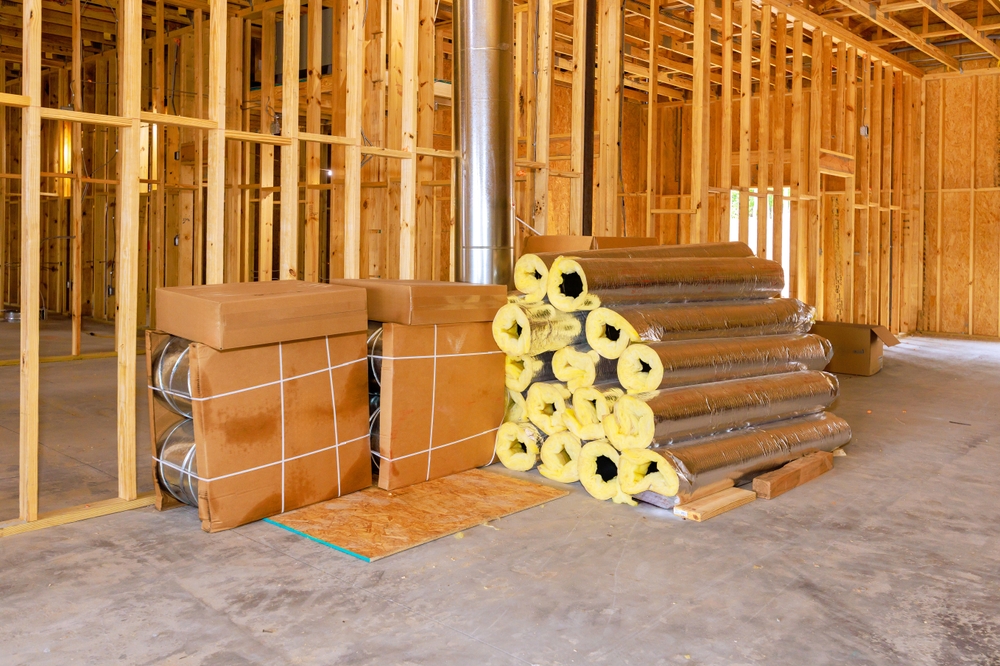
The insulation stage is one of the best opportunities to improve how a building will perform over the long term. Once drywall is up and the project is finished, correcting bad insulation decisions becomes slower, messier, and more expensive. During construction, the framing is open, the assemblies are visible, and the installation can be coordinated correctly the first time.
That makes new construction insulation a critical part of the building process, not just another line item to check off. When materials are chosen carefully and installed with attention to coverage, fit, and building design, the result is a structure that holds conditioned air more effectively, supports more stable indoor temperatures, and puts less strain on heating and cooling equipment from the start.
Open framing and clear access make it easier to insulate the right areas correctly before finishes hide critical details.
Good insulation planning early in the job helps reduce thermal weak points that can follow the building for years.
Installing insulation correctly during construction is usually far easier and more efficient than retrofitting problems after occupancy.
If the project later needs targeted upgrades in an existing structure, related pages include retrofit insulation, energy-efficient insulation, and eco-friendly insulation.
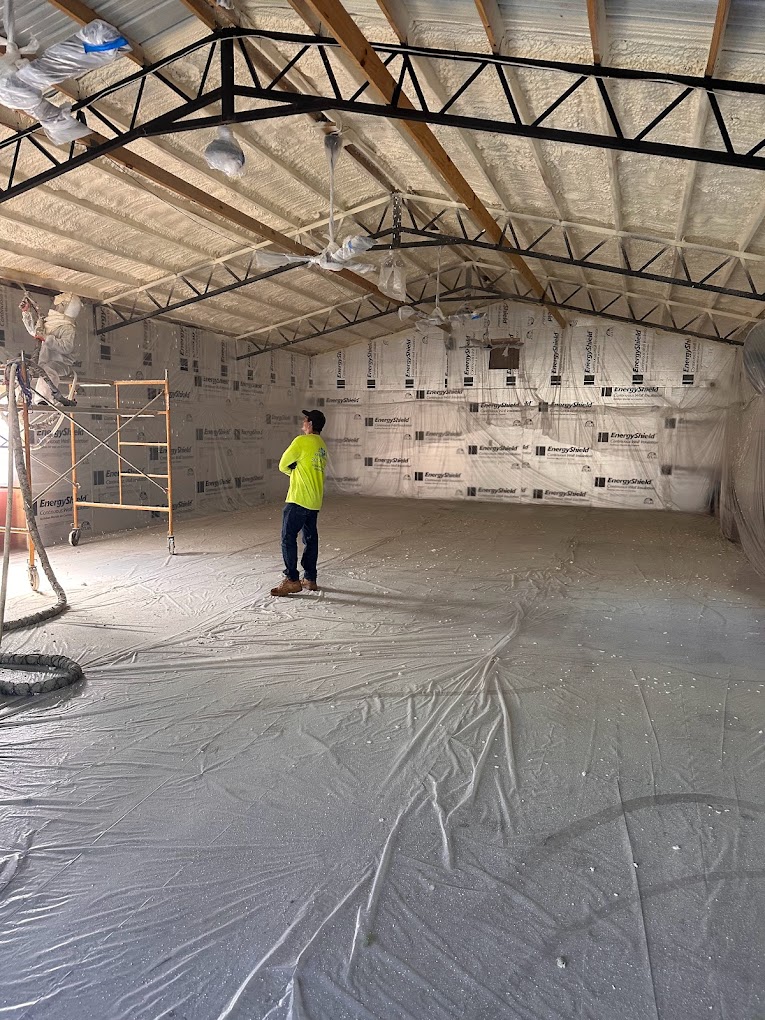
Need insulation planned before the build moves too far?
We can review the project, identify insulation priorities, and help set the job up for better long-term performance.
Schedule a ConsultationThe building envelope starts taking shape long before the project is occupied.
As soon as a building is occupied, the insulation system begins influencing how hard the HVAC equipment has to work. If insulation is thin, inconsistent, compressed, or poorly placed, conditioned air is lost more easily and unwanted heat transfers through the building envelope faster. That drives up operating costs and creates comfort issues the occupants notice early.
When new construction insulation is installed properly, it helps reduce that waste from the start. Rooms stay more stable, cooling and heating systems do not have to fight the structure as aggressively, and the building begins its life cycle on stronger footing.
The right insulation system depends on the building design, usage, assemblies, and performance expectations.
A common option for walls, ceilings, and attics where cost-effective thermal control and broad coverage are priorities.
Often chosen where air sealing, tighter assemblies, and stronger thermal control are important parts of the design strategy.
Useful for certain cavities and spaces where even coverage and efficient installation are needed.
Often used where continuous insulation strategies or high-performance assemblies are part of the build plan.
Atlas Insulation works with multiple product categories because new construction projects rarely benefit from a one-material-fits-all approach. Depending on the build, the insulation package may include batt insulation, blown-in insulation, open cell spray foam, closed cell spray foam, rigid foam insulation, or Fi-Foil insulation depending on the area and project goals.
The best insulation choice comes down to where it is being installed, what the assembly needs to do, how tightly the building envelope is being designed, and what level of thermal and air-control performance the client expects over time.
Good insulation work starts before the installer shows up with material.
New construction insulation has to work with the framing plan, mechanical penetrations, architectural details, and intended use of the building. If those elements are not coordinated well, insulation can end up compressed, interrupted, poorly aligned, or installed around details that create avoidable weak points.
Atlas Insulation takes a planning-focused approach so insulation does not become an afterthought squeezed in at the last second. The goal is to look ahead at the build and make sure the insulation strategy supports the actual structure instead of conflicting with it. That leads to cleaner coverage, better continuity, and fewer problems at inspection time or after occupancy.
This is especially important on projects where performance expectations are higher, whether because of energy goals, tenant comfort, owner priorities, or the demands of the building type itself.
Want the insulation plan coordinated early?
We work with builders and property owners to reduce avoidable problems before they get buried behind finished surfaces.
Request Project ReviewDifferent building types often need different insulation priorities, even when the core goal is the same.
In residential projects, insulation often plays a direct role in comfort, room-to-room consistency, sound control, and long-term utility savings. Homeowners expect a house to feel stable, efficient, and comfortable from the moment they move in. That means the insulation package has to support more than code minimums on paper. It has to support real living conditions inside the home.
Related residential-focused service pages include attic insulation, crawl space insulation, and energy-efficient insulation.
Commercial projects may place more weight on operating efficiency, durability, compliance, assembly performance, and the demands of larger conditioned spaces. Warehouses, office environments, retail builds, and tenant spaces each bring different expectations. The insulation system has to support the intended use of the property without creating long-term efficiency penalties.
That is why commercial new construction insulation should be handled with the same seriousness as any other core building system. Poor decisions here show up later in operating costs, inconsistent interior conditions, and preventable building-envelope issues.
Code compliance is not optional, but it also should not be the only goal.
New construction insulation needs to align with current code requirements related to R-values, air sealing expectations, and assembly performance. If the insulation package is poorly coordinated, the project can run into delays, corrections, rework, or inspection failures that cost time and money. Atlas Insulation stays focused on proper installation standards so projects are not undermined by insulation shortcuts.
For broader insulation guidance, the U.S. Department of Energy provides a useful overview of insulation fundamentals here: Energy Saver insulation guidance.
In a hot climate, insulation quality affects comfort, efficiency, and long-term cost control almost immediately.
Buildings in Doral, FL face heavy cooling demand and long stretches where the structure is constantly being tested by heat and humidity. That makes insulation one of the most important systems to get right during construction. A better-insulated building is usually easier to condition, less wasteful to operate, and better positioned for long-term comfort and efficiency.
Atlas Insulation helps builders, property owners, and developers approach insulation as a performance decision that affects the life of the building, not just the construction schedule. If you want to learn more about the company before starting a project, visit our About Us page, review our testimonials, or return to the homepage.
For projects across South Florida, good insulation planning during construction is one of the simplest ways to avoid paying for preventable performance problems later.
Straight answers for builders, owners, and developers planning insulation for a new build.
It helps the building meet energy and comfort goals from the start by reducing heat transfer, supporting HVAC efficiency, and improving long-term performance before the structure is finished.
The best choice depends on the building type, the assembly being insulated, the performance goals, and code requirements. Common options include fiberglass, spray foam, blown-in insulation, and rigid foam insulation.
Yes. Residential and commercial buildings often have different insulation priorities, so the insulation strategy should be tailored to the structure, use, and long-term performance expectations of the project.
Yes. Proper insulation planning and installation help projects meet applicable code requirements related to thermal performance, air sealing, and overall building-envelope quality.
Yes. Atlas Insulation provides new construction insulation services in Doral, FL for residential and commercial projects that need strong long-term comfort, efficiency, and performance.
Talk with Atlas Insulation about a new construction insulation strategy that supports comfort, code compliance, and long-term building performance.